Vintage Film 101: Picking Your Setup & Selecting Your First Roll
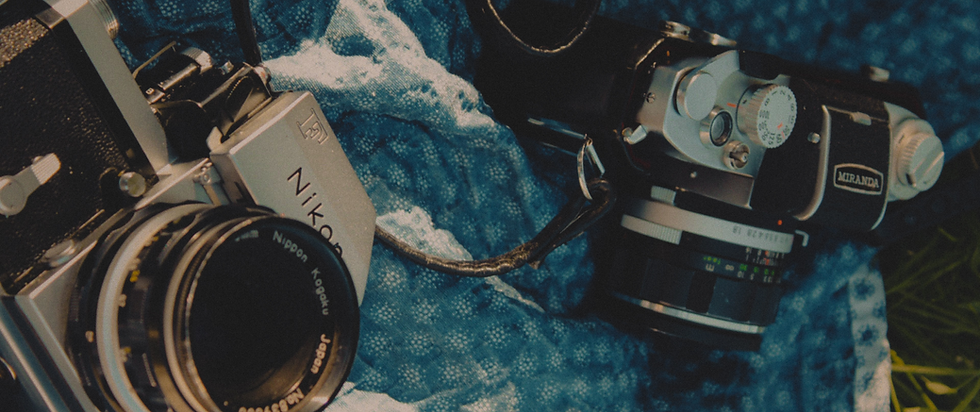
If you’ve spent any time on Pinterest lately, you’ve probably felt that irresistible pull toward analog photography. The rich, velvety shadows, the buttery highlight falloff, the natural grain – it carries a soul that modern, hyper-processed smartphone sensors just can't duplicate.
But if you’re standing at the edge of the analog world looking in, it’s ridiculously easy to feel overwhelmed. Between 35mm vs. 120 format, mechanical shutters, ISO ratings, and the sheer terror of opening an estate sale camera only to find a fried light seal, where do you even start?
Consider this your complete, zero-gatekeeping manual to picking your first film body, matching the right film stock to your aesthetic, and shooting without burning through your entire bank account.

Picking Your Camera Setup (Without Getting Scammed)
Buying a 40-year-old camera is an elite sport. But before you drop $150 on an aesthetic paperweight at a flea market, you need to know what gear actually fits your shooting style.
The Fully Manual SLR (The Creative Workhorse)
Examples
Canon AE-1, Pentax K1000, Olympus OM-1, Minolta X-700.
The Vibe
Complete creative control. You manually set your aperture, shutter speed, and focus through a real optical viewfinder.
Who It's For
The photographer who wants to truly understand light, depth of field, and tactile mechanics.
Red Flag Check
Open the back door! If the foam light seals look like sticky, melted tar, or if the mirror stays stuck up when you press the shutter button, walk away unless you want to pay for a full overhaul.
The Vintage Point-and-Shoot (The Effortless Vibe)
Examples
Olympus XA2, Canon AF35M, Pentax Espio series, Nikon One Touch.
The Vibe
Pure spontaneity. You pop in a battery, load the film, and let the camera handle the focus and exposure while you focus on the moment.
Who It's For
Anyone who wants that high-contrast, flash-heavy, early-2000s street style without overthinking settings.
Red Flag Check
Pop open the battery compartment! Corrosion (that crusty green/white powder) on the battery contacts is the #1 killer of thrifted point-and-shoots.
Selecting Your Film Stock (Decoding the Aesthetics)
The camera body is just a light-proof box with a lens – the film stock you load inside is your actual digital preset.
Film speed is measured in ISO (or ASA). Lower numbers (ISO 100–200) need bright daylight and give you ultra-fine grain. Higher numbers (ISO 400–800) work in lower light and give you that moody, classic grain texture.
The Everyday Gold Standards
Kodak Gold 200 / Ultramax 400: Warm, nostalgic, and forgiving. Expect sunny yellow highlights, punchy reds, and that unmistakable "golden hour in 1998" warmth. Perfect for summer days and casual hangs.
Kodak Portra 400: The undisputed holy grail for editorial portraits. It renders skin tones like absolute butter, handles overexposure gracefully, and gives you soft, muted pastel contrast.
Fuji Color 200 / Superia X-TRA 400: Cooler, moodier, and greens-focused. If you love deep emerald tones, minty highlights, and crisp street photography contrast, load Fuji.
The Black & White Classics
Ilford HP5 Plus 400: Gritty, iconic, and virtually indestructible. You can mess up your exposure by two full stops, and HP5 will still give you rich, silvery tones and deep black contrast.
The Golden Rules for First-Time Film Shooters
When in Doubt, Overexpose Slightly: Unlike digital sensors (which clip white highlights instantly), film loves extra light. If you aren't sure about your light meter, feed it a little extra sun.
Never Open the Back Door Mid-Roll: It sounds obvious, but the second ambient room light hits exposed film outside the canister, your frames vanish into a white fog.
Find a Good Local Lab: Don't drop your film off at a big-box drugstore that destroys your negatives! Support an indie lab that offers high-resolution scans and keeps your physical negative sleeves safe.
Stop overthinking the technical jargon, go hunt down a classic body, and shoot a roll.


Comments