Shutter Speed Demystified: Capturing Time in Film & Digital

If Aperture is the pupil of your eye, Shutter Speed is the eyelid. It’s the duration of time the camera’s sensor (or film) is "looking" at the world.
In the digital world, we often use it to keep things sharp, but in the creative world – especially here at KatieKPrintStudio – we use it to play with reality. Whether you’re shooting a fast-moving street scene or a still life in the studio, here is the no-gatekeeping breakdown of how to master time.
What Is It, Physically?
Inside your camera, there is a literal curtain (the shutter) sitting in front of the sensor or film. When you hit the button, it opens, lets light hit the "recording surface," and then snaps shut.
We measure this in fractions of a second.
1/1000: Lightning fast. The blink of an eye.
1/60: A human heartbeat.
1 second: A long, slow breath.
The Relationship with Light
This is the "balancing act" of the Exposure Triangle.
Fast Shutter (1/1000+): The curtain is barely open, so very little light gets in. You’ll need a wide aperture (f/1.8) or a bright day to make this work.
Slow Shutter (1/30 or lower): The curtain stays open, drinking in light. This is how you shoot in the dark, but it comes with a catch: Motion Blur.

The Creative Choice: Frozen vs. Fluid
This is where the magic happens.
The Freeze (1/500 and up): Want to catch a splash of water, a bird in flight, or a person running through a city without any blur? You need speed. High shutter speeds turn chaos into a sharp, frozen memory.
The Motion (1/15 to 1/60): This is the "sweet spot" for street photography. If you want a person to be sharp but the cars behind them to be a slight blur of color, this is your zone.
The "Shutter Drag" (1/8 or lower): This is very "KatieK." By leaving the shutter open and moving the camera slightly, you get those ethereal, light-streaked, "ghostly" images. It feels like a dream, not a document.

Digital vs. Film: The Sharpness Struggle
The physics are identical, but the consequences of a bad shutter speed choice feel very different depending on your medium.
On Digital:
Modern mirrorless cameras have "In-Body Image Stabilization" (IBIS). This is a literal cheat code. It allows you to shoot at slower shutter speeds (like 1/10) while holding the camera in your hand without the whole image looking like a shaky mess.
The Hack: Use "Electronic Shutter" mode if you want to be completely silent and avoid "shutter shock" (the tiny vibration of the physical curtain moving).
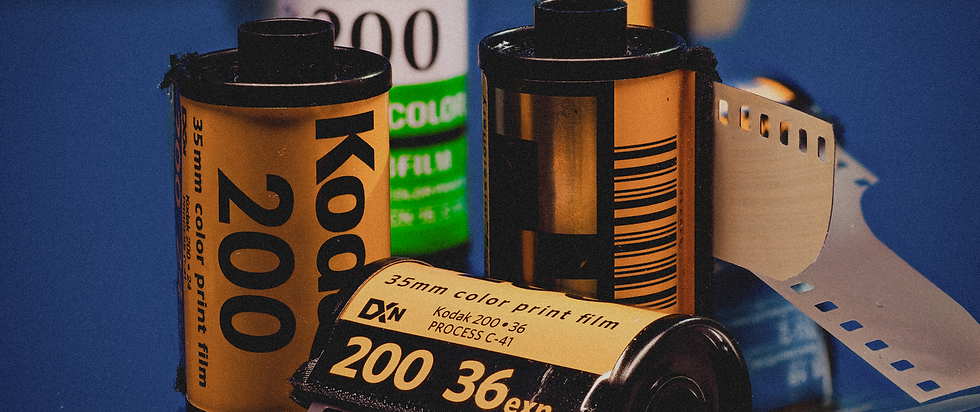
On Film:
There is no "stabilization" on a 1970s Canon AE-1. You are flying solo.
The Golden Rule: Never shoot at a shutter speed slower than your focal length.
Shooting with a 50mm lens? Don’t go below 1/60.
Shooting with a 200mm lens? Don’t go below 1/250.
The Danger: If you shoot too slow on film, your grain will look "mushy" because of camera shake. On film, crispness is a luxury – you have to earn it with a steady hand.
Shutter Angle & Video
If you’re a photographer starting to play with video, you’ve probably noticed your footage looks "jittery" or "too sharp" (like a soap opera).
The Fix: The 180-Degree Rule. To get motion blur that looks "cinematic" (like a movie), your shutter speed should be double your frame rate.
The Math: Shooting at 24 frames per second? Your shutter should stay at 1/50. This is how you get that professional, "expensive" motion blur in your reels.
Which Speed Should You Pick?
1/1000: "I’m freezing a moment in bright sun."
1/250: The standard "walking around" speed. Safe for most handheld shots.
1/60: The edge of safety. Great for adding a little life/movement to a scene.
1/15 or slower: "I have a tripod (or a very steady hand), and I’m chasing a vibe."


Comments