The Instant Film Battle: Polaroid vs. Instax

If you’ve ever found yourself standing in the camera aisle completely paralyzed, staring at a box of Polaroid film on one side and Fuji Instax on the other, wondering why one costs a small fortune and the other feels like buying candy at the checkout line, you are not alone.
There is so much snobbery in the analog world, but at the end of the day, both of these formats are incredible in their own chaotic ways. Neither one is "better" – they just have totally different personalities, price tags, and crazy fascinating histories.
Whether you’re buying your first camera, hunting for that retro aesthetic, or just trying not to waste $20 on a pack of dud shots, here is the honest, zero-gatekeeping breakdown (complete with the actual science and history) of how Polaroid and Instax stack up.
The History & The Science
To understand why a Polaroid shot looks like a 1970s dream and an Instax shot looks like a crisp modern print, you have to look at how they were born.
Polaroid (The Original Miracle)
Back in 1947, a genius named Edwin Land invented instant film because his 3-year-old daughter asked why she couldn't see a picture he just took right away. By 1972, Land released the legendary SX-70—the first camera with "integral" film that ejected automatically and developed right in your hands without peeling away sticky chemical paper.
The Reality Today: When Polaroid's original factories shut down in 2008, a group called "The Impossible Project" bought the last remaining factory in the Netherlands to save the medium. Because they had to rebuild the chemical formula from scratch without toxic old-school chemicals, modern Polaroid is literally an evolving chemical experiment! That’s why it’s moody, sensitive, and uniquely romantic.
Fuji Instax (The Tech Refinement)
Fujifilm launched Instax back in 1998, building on decades of photographic dye technology (and taking inspiration from the instant film systems of the 80s).
The Reality Today: Instax uses a stabilized dye-coupler emulsion system that mirrors traditional wet-lab silver halide photo paper. That’s why it develops in under two minutes, doesn't freak out in the sun, and gives you vibrant, razor-sharp colors every single time.
Aesthetic & Color Rendition
Here’s where your personal style comes into play:
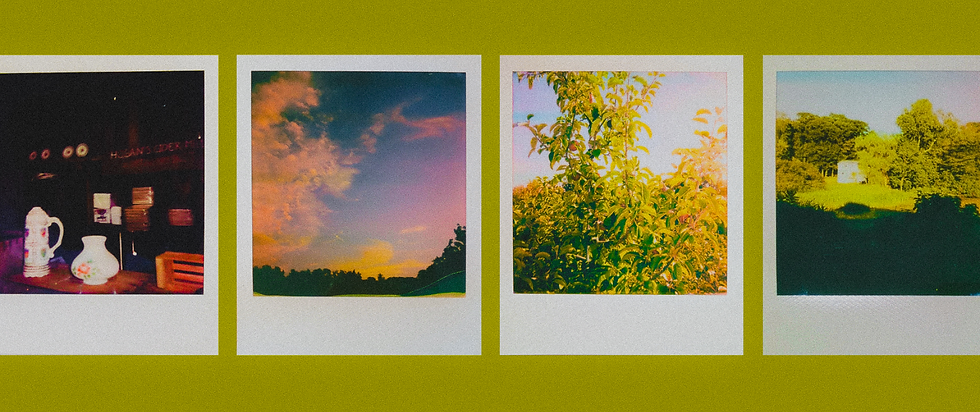
Polaroid: Gives you soft contrast, deep velvety shadows, dreamy pastels, and unpredictable color shifts. Shoot it in hot weather? The chemistry shifts warm reds and yellows. Cold weather? It turns icy blue and green. It’s perfect if you love artistic imperfections and authentic vintage nostalgia.
Fuji Instax: Gives you ultra-vibrant colors, crisp highlights, true skin tones, and dead-reliable consistency. What you see through the viewfinder is pretty much exactly what pops out on paper.
The Real-World Budget Breakdown
Let’s talk money, because instant film can turn into a very expensive habit if you aren't paying attention.
Polaroid: Runs about $2.00 to $2.75+ per shot, and each pack only holds 8 exposures (fun historical fact: vintage packs held 10, but modern chemical pods are thicker, so only 8 fit in a pack now!). At almost $3 a pop, it forces you to slow down, compose carefully, and treat every frame like gold.
Fuji Instax: Comes in at $0.75 to $1.25 per shot with 10 exposures per pack. Because it’s so much more affordable, you feel total freedom to pass the camera around at a party or snap candid mistakes without sweating the cost.
Format Sizes & Practical Uses
Polaroid: Gives you the classic Square Frame ($3.1 \times 3.1$ inch image area with that famous wide bottom border for writing dates or captions) and the miniature Polaroid Go format.
Fuji Instax: Offers three distinct sizes:
Instax Mini: Credit-card sized. Perfect for phone cases, bookmarks, and junk journals.
Instax Square: Very close to Polaroid’s square ratio, just slightly smaller overall.
Instax Wide: Double the width of a Mini. Absolute perfection for group shots, landscapes, and editorial studio layouts.
Useful Handling Tips
Polaroid: The second it ejects, shield it from light for the first 10–15 seconds (pop it face down or slide it into a dark pocket). Keep unused film in the fridge (never the freezer!) and let it warm up to room temperature for an hour before shooting. And please – stop shaking it like a Polaroid picture! Shaking breaks the delicate chemical paste layers inside.
Fuji Instax: Instax is practically bulletproof. You don't need to hide it from daylight when it ejects, and it develops completely in about 90 seconds flat.
The Verdict: Which One Fits Your Studio?
Grab Polaroid if: You’re an artist who loves physical texture, vintage history, intentional shooting, and glorious chemical surprises.
Grab Instax if: You want sharp photos, quick development, affordable film packs, and a camera you can take anywhere without stressing over a wasted frame.
At the end of the day, both formats bring physical magic back into a digital world. Load a pack, respect the chemistry, and go make some art!


Comments